Validation & Evidence
Validation covers individual functions, API contracts, service integration, system workflows, and persistent data. Because the platform is distributed, a passing unit suite is necessary but not sufficient: cross-service response shapes and failure behavior must also be exercised.
Reported test cases
| ID | Area | Scenario | Expected result |
|---|---|---|---|
| TC-01 | Auth | Valid registration | User created and token flow available |
| TC-02 | Auth | Invalid credentials | Controlled authentication error |
| TC-03 | Data | Valid ticker | Quote/history returned |
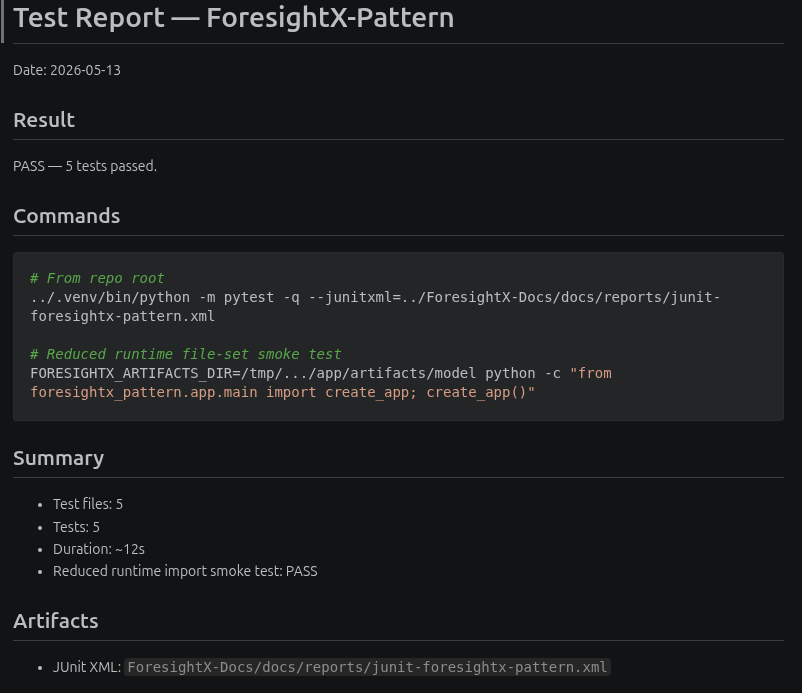
| TC-04 | Pattern | Valid feature window | Direction and confidence returned |
| TC-05 | Profile | Portfolio update | Position and transaction persisted |
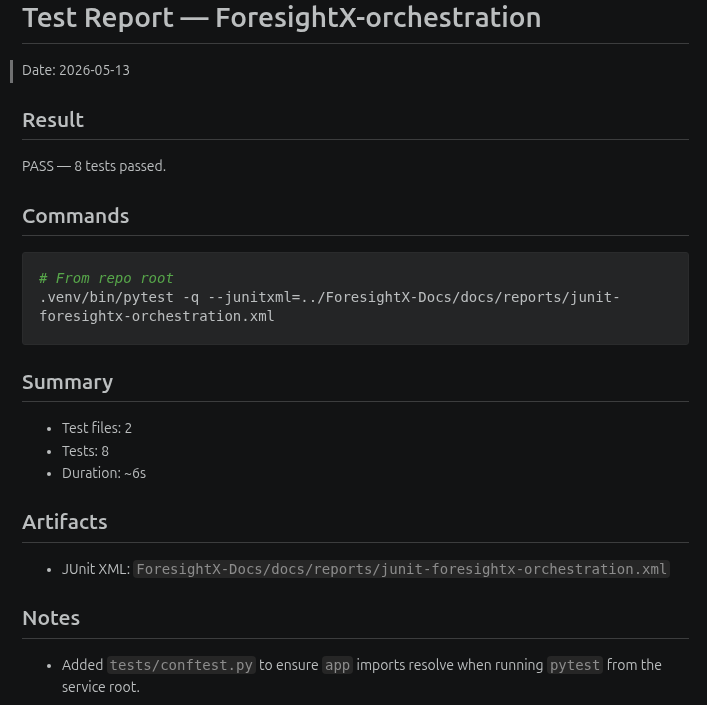
| TC-06 | Orchestration | Complete analysis request | Consolidated recommendation returned |
| TC-07 | Health | Service health request | Healthy status response |
| TC-08 | Data | Invalid ticker | Structured error without service crash |
Captured backend results
Persistent-data checks
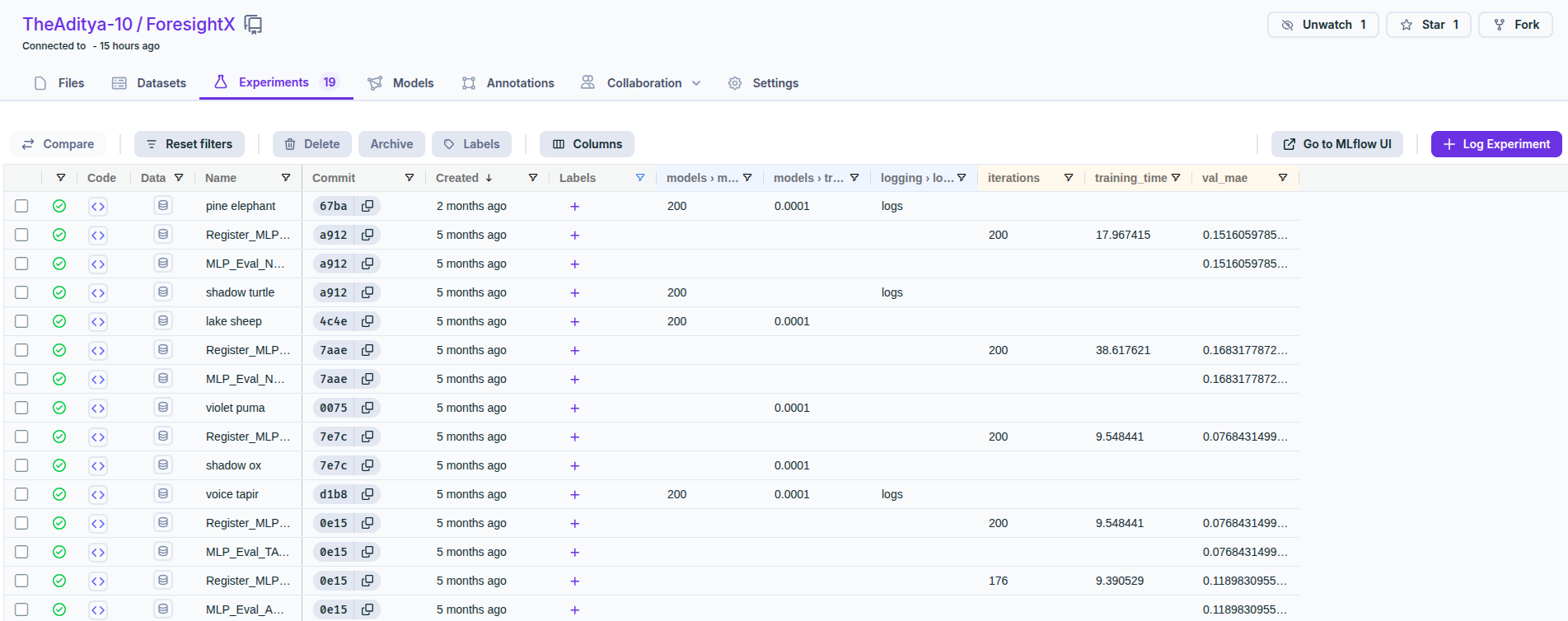
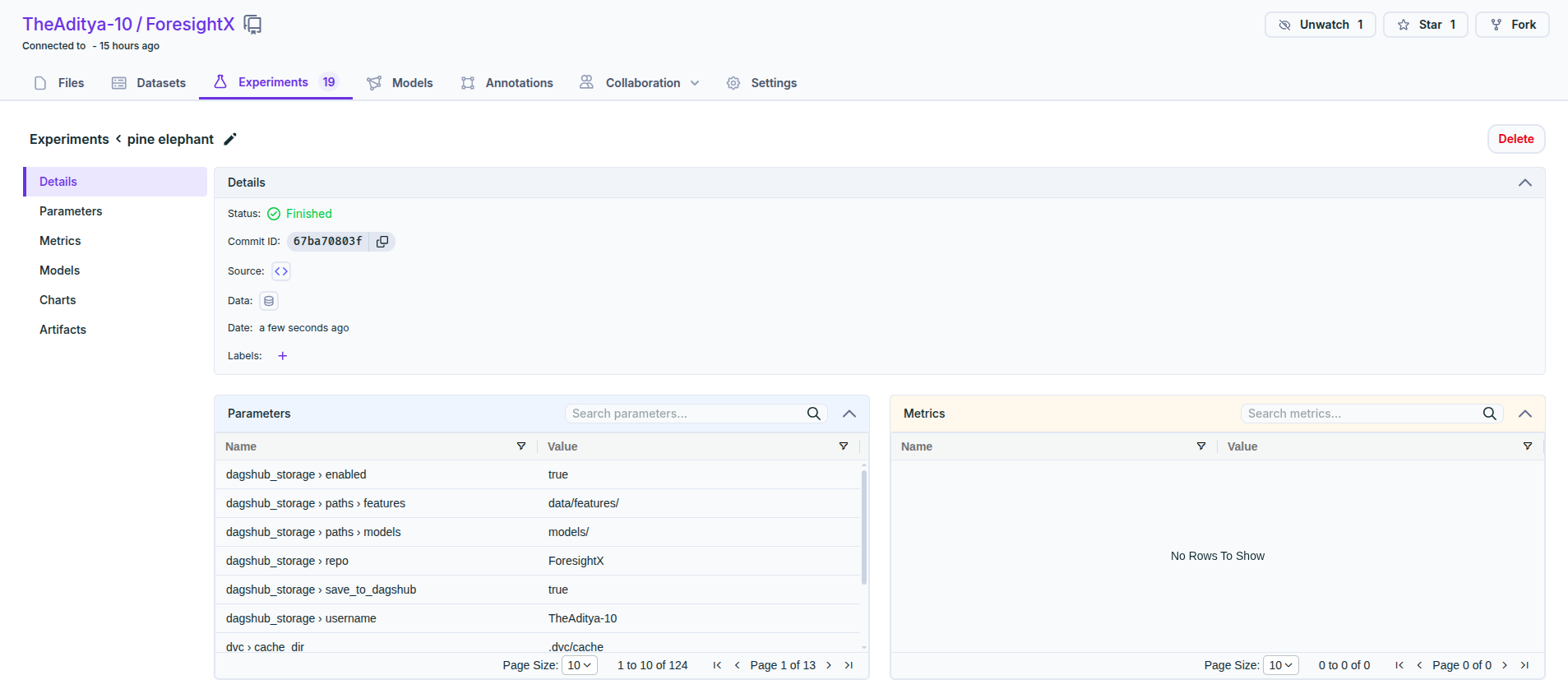
Database inspection was used to verify that normalized records and expected fields were written after API operations.
Debugging approach
- Reproduce the request against the owning service.
- Confirm health status and environment configuration.
- Validate request and response schemas.
- Inspect service logs and external dependency responses.
- Verify database writes or cache state.
- Repeat the end-to-end request through NGINX.
For ML output, validation also includes feature shape, missing values, preprocessing consistency, artifact availability, and basic prediction sanity checks.